Battery Recycling: Myths and Facts
16 Sep, 2026By ReBAT1 min read
Battery recycling is often surrounded by assumptions, but how many of them are actually true? From recycling efficiency and critical mineral recovery to the role of recycling in India's energy transition, there's a lot more to the story than commonly believed. Here, ReBAT separates the myths from the facts.
Myth: Recycling batteries means melting them down.
Fact: Modern battery recycling is far more sophisticated. Processes can involve mechanical separation, hydrometallurgy and other refining techniques to recover valuable materials.
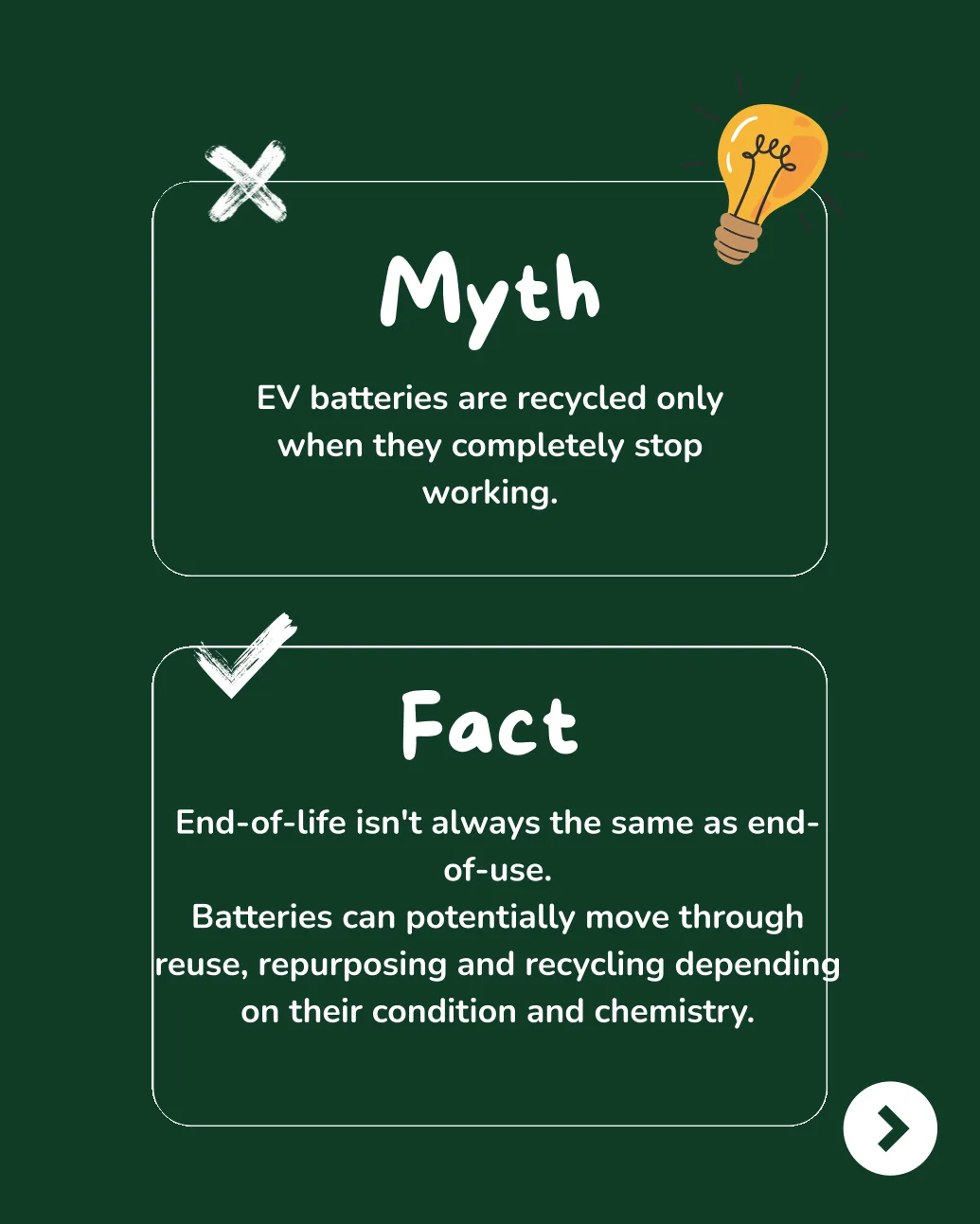
Myth: EV batteries are recycled only when they completely stop working.
Fact: End-of-life isn't always the same as end-of-use. Batteries can potentially move through reuse, repurposing and recycling depending on their condition and chemistry.
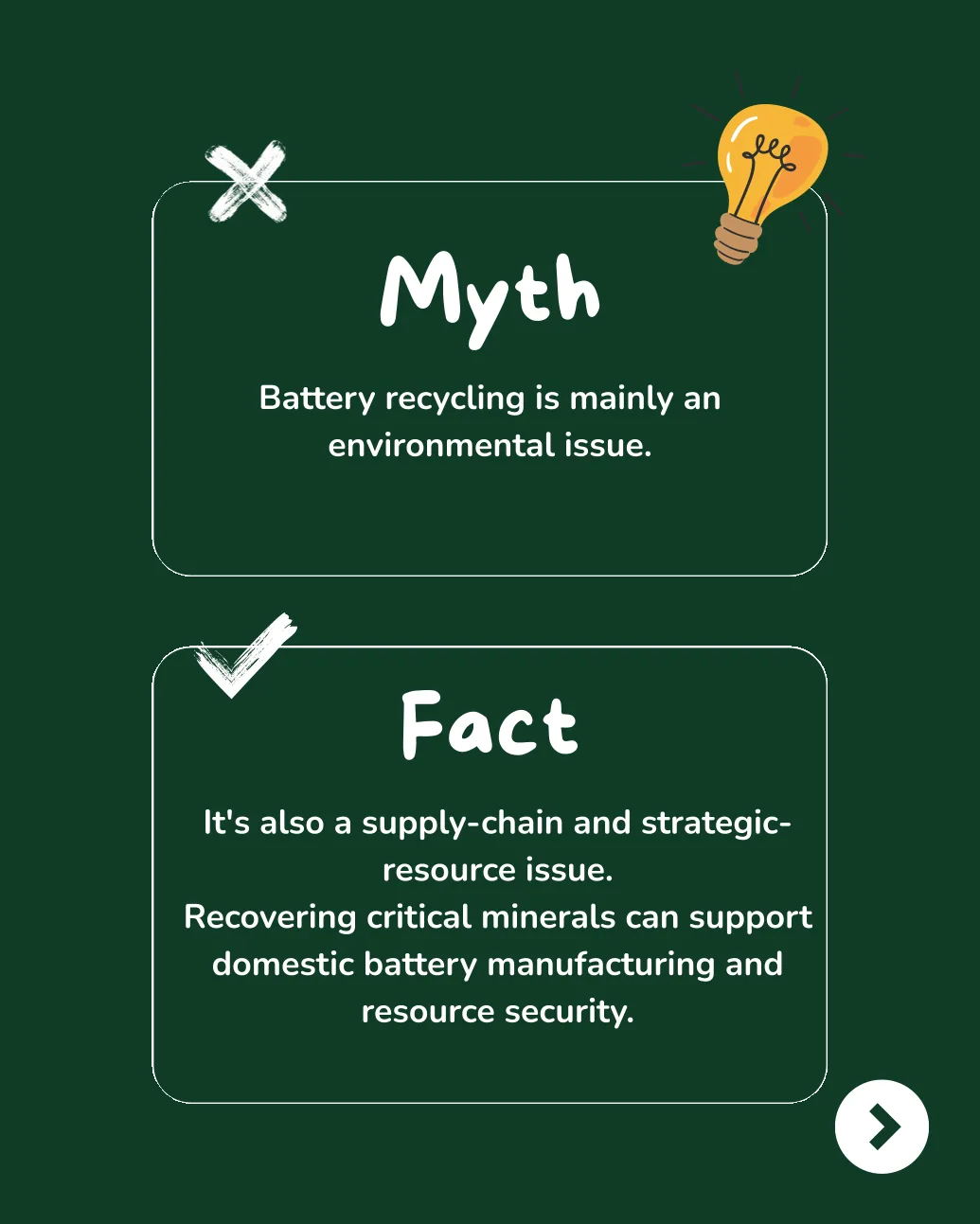
Myth: Battery recycling is mainly an environmental issue.
Fact: It's also a supply-chain and strategic-resource issue. Recovering critical minerals can support domestic battery manufacturing and resource security.
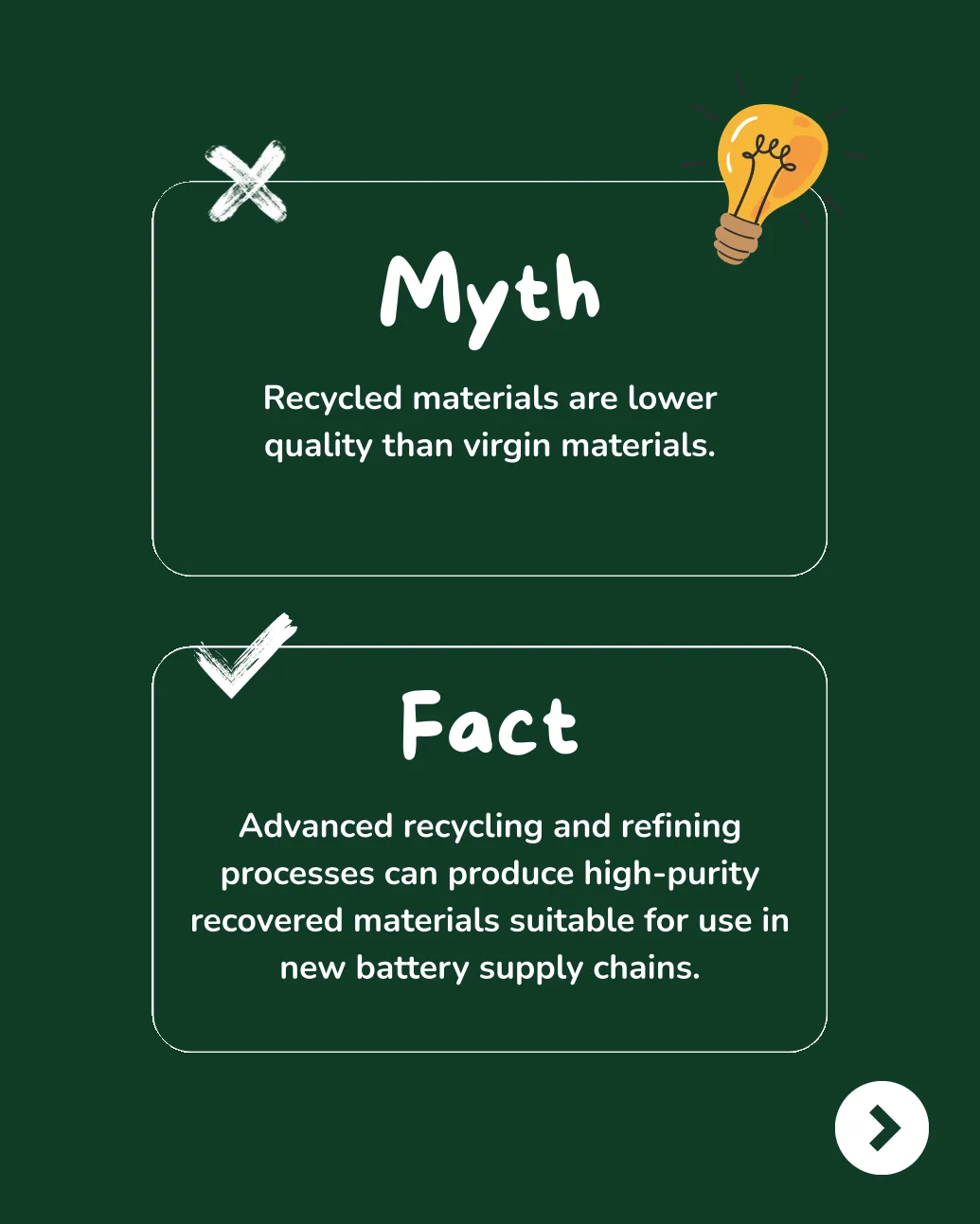
Myth: Recycled materials are lower quality than virgin materials.
Fact: Advanced recycling and refining processes can produce high-purity recovered materials suitable for use in new battery supply chains.
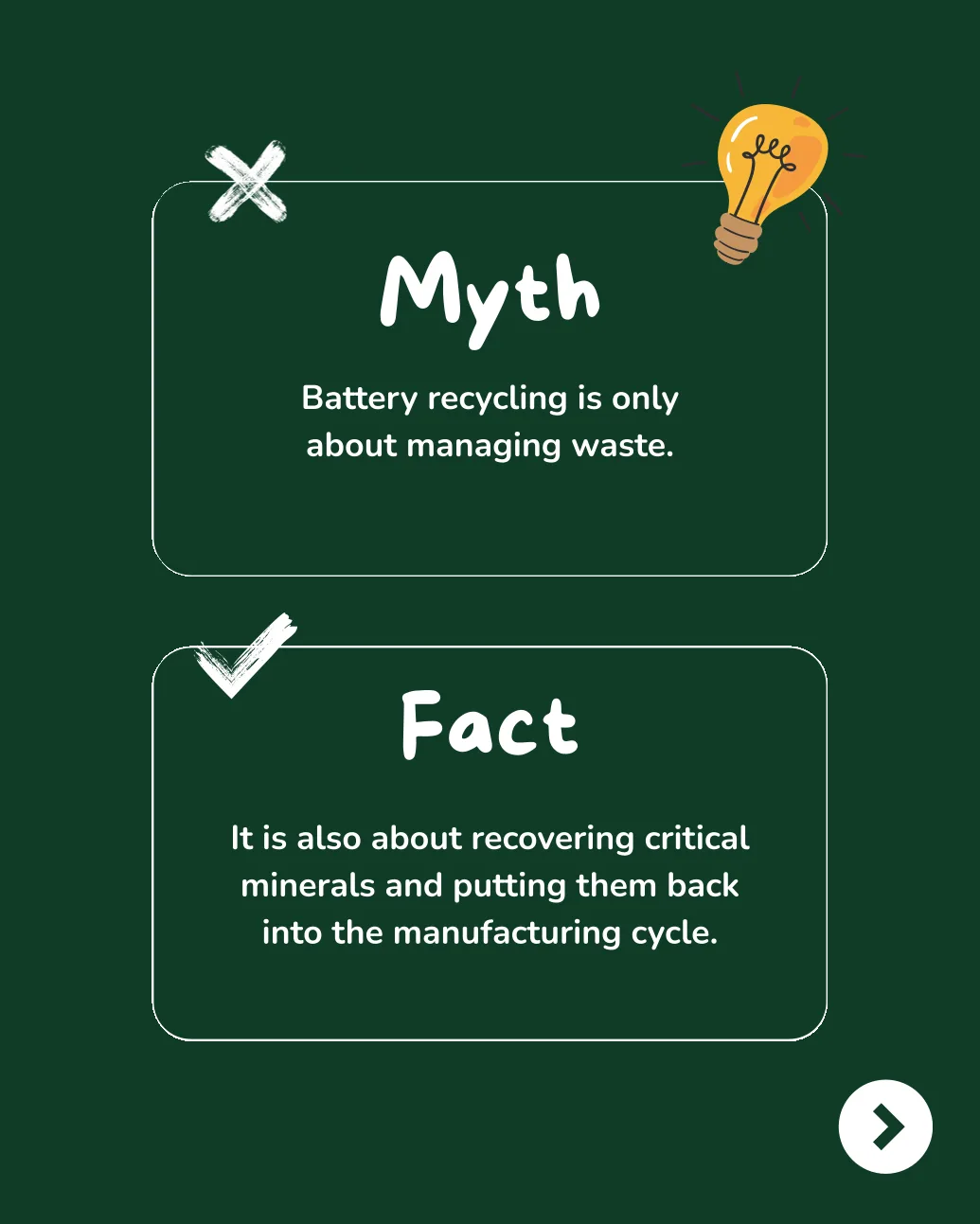
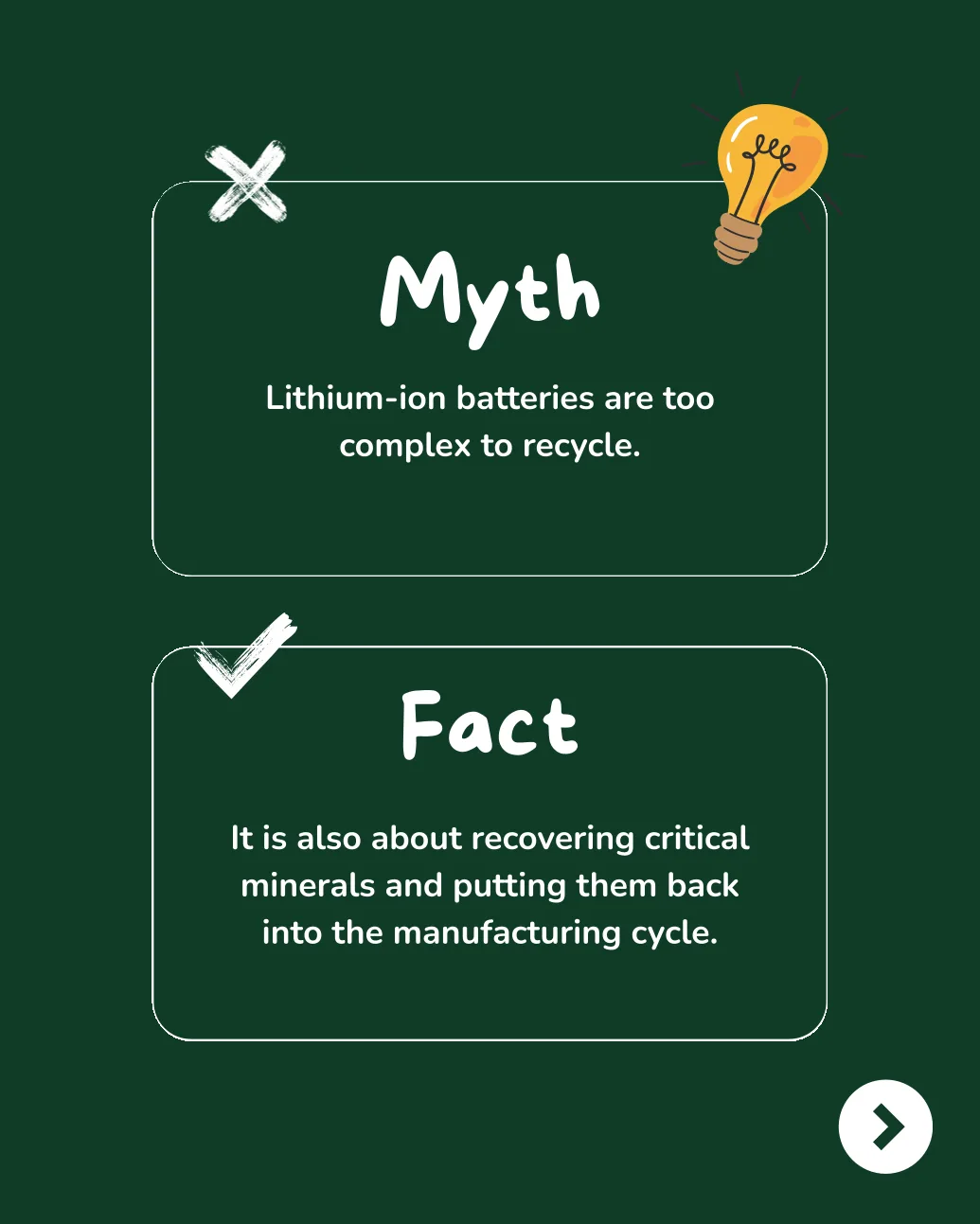
Myth: Battery recycling is only about managing waste.
Fact: It is also about recovering critical minerals and putting them back into the manufacturing cycle.